
Why Solana Explorers Like Solscan Matter — And How to Use Them Without Getting Lost
Whoa! That initial glance at a block explorer hits you like a cockpit full of blinking lights. The rows of addresses, signatures and program logs can feel overwhelming. But here’s the thing. If you know how to read the core pieces, an explorer becomes a forensic tool, a dashboard, and a traffic camera all at once — though it takes some practice to get fluent.
Hmm… seriously? Yes. Block explorers on Solana are not just for proving transactions went through. They show token minting history, program invocations, and the messy edge-cases that wallets sometimes hide. My instinct said early on that explorers would be niche, but then they became essential for debugging and trust-building. Initially I thought they were only for devs, but regular users benefit just as much when they know where to click and what to ignore.
Wow! Start with the basics — slot, signature, and lamports. A slot is Solana’s unit of time; a signature is the unique fingerprint of a transaction; and lamports are the tiny units of SOL. Medium-level detail: transactions are executed by programs, and those programs emit logs that explorers surface. Longer thought: understanding how instructions map onto program IDs, and how inner instructions can reveal token swaps, bridging steps, or failed attempts, will save you hours when tracing funds across smart contracts and exchanges.
How to Approach an Explorer Like a Pro (without panicking)
Okay, so check this out—there are three paths people take when they land on an explorer: glance-and-go, detective-mode, or integration-mode. Glance-and-go is fine for quick confirmations, though it’s superficial. Detective-mode is where you dig into inner instructions, account balances pre/post, and program logs to answer «where did my tokens go?» Integration-mode means using APIs and webhooks for automated monitoring. On one hand, a casual user just wants confidence; on the other hand, an engineer needs reproducible data to debug state changes across programs.
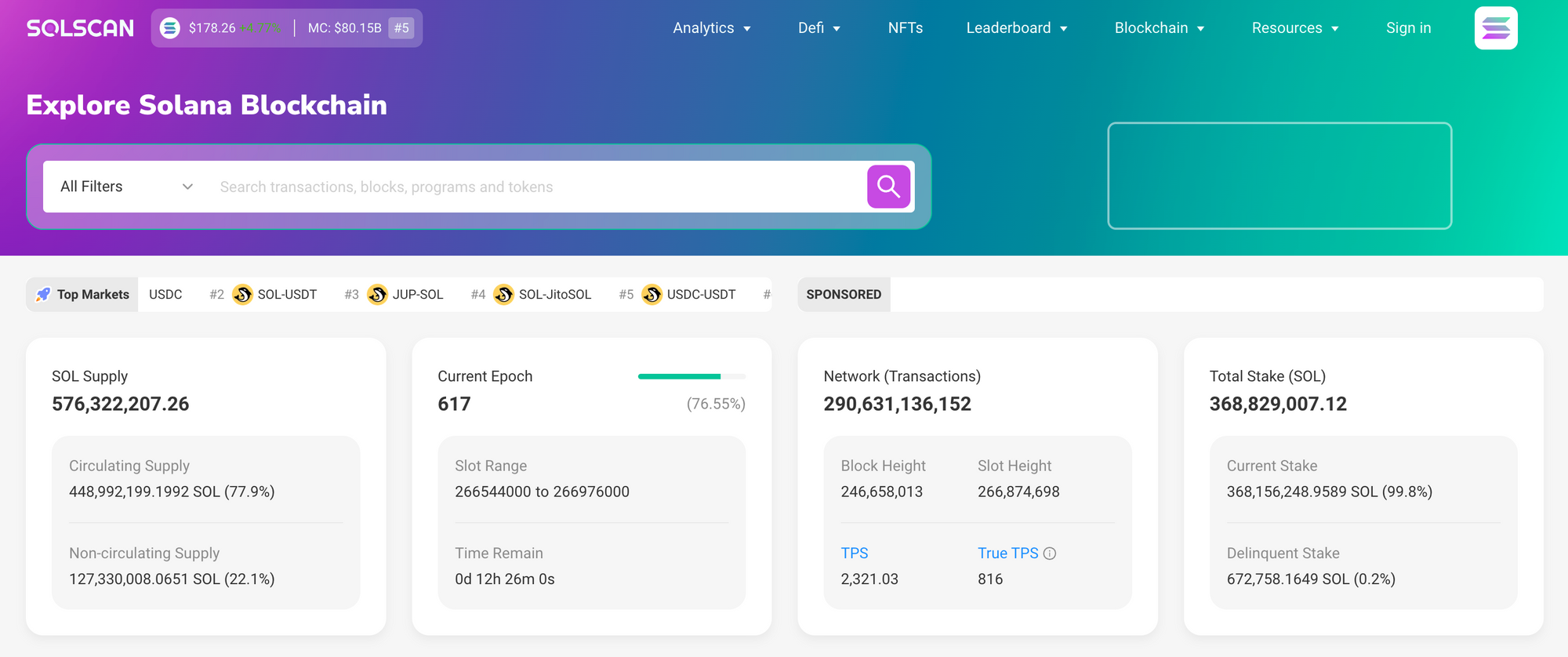
Here’s a bruise of truth: not every explorer shows exactly the same things or formats them the same way. Some list SPL token transfers cleanly, others bury them inside inner instructions. That inconsistency is annoying. A tool like solscan tends to be one of the friendlier interfaces for token-level detail, but even it has nuances you should know. Actually, wait — let me rephrase that: it surfaces token mints, owners, and recent transfers quickly, which helps when you want to confirm token provenance or check a mint’s metadata.
Hmm… something felt off about relying only on the explorer UI when I first used these tools. So I started cross-checking signatures against RPC responses and program logs directly. That extra step often reveals soft-failed instructions or signatures that were dropped and retried — things UIs sometimes hide. On the flip side, the UIs are great for pattern recognition: repeated failed swaps, airdrop patterns, or bots front-running transactions become obvious when you watch a few dozen transactions.
Seriously? Yep. Always copy the transaction signature and use it as your primary key. Paste it into the explorer, then into an RPC curl request if you need raw JSON. Medium tip: look at the «status» field first, then the «meta» section for pre/post balances and inner instructions. For deeper research, expand program logs and search for known program IDs (e.g., token program vs. Serum). Longer analysis: by reconstructing the sequence of instructions and how accounts’ data bytes changed, you can understand state transitions and reason about whether a contract behaved as intended or a wallet signed the wrong instruction.
Common Scenarios and How to Read Them
Scenario one: «I sent tokens, but recipient didn’t get them.» Wow! First step — check the signature. If it’s confirmed, look at pre/post balances. Often you’ll find the token was sent to an associated token account that the recipient doesn’t control. That happens more than you’d think. Practically, the explorer shows you the destination token account; hover or expand the account to see its owner. If the owner equals the mint authority, or some unexpected program, you may be looking at a token-account mismatch rather than a lost transfer.
Scenario two: «My swap failed and I still got charged fees.» Really? Yep. Solana charges fees independent of swap success. The explorer’s meta will show compute units consumed and fee charged. Medium insight: high compute usage or repeated retries can exhaust fee budgets on constrained wallets. Longer thought: when designing client-side workflows, it’s prudent to simulate transactions, estimate compute budgets, and warn users about retry risks — otherwise they face cascading fees after repeated failures.
Scenario three: «Is this token legit?» Hmm… start with the token mint page. Check the supply, decimals, and recent minting activity. Look for verified metadata entries (if the explorer supports them) and track the token’s first mint transactions. Often you’ll notice a token that had multiple mints or unusual holder concentration (one address holding most supply) — that pattern is a red flag. But note: new legitimate projects can also show odd patterns early, so don’t panic immediately; combine on-chain signals with off-chain research.
My bias: I prefer tooling that makes inner instructions visible, not hidden. This part bugs me because some interfaces hide the complexity to «simplify» things, and that can obscure critical details. I’m not 100% sure that’ll change everywhere soon, but developer pressure usually nudges UIs toward transparency. Meanwhile, get comfortable drilling into the instruction tree; it’s where trust is actually built.
APIs, Automation, and Practical Tips for Builders
Whoa! If you’re building product on Solana, integrate explorer-like queries into your backend. Polling confirmed signatures and watching account changes avoids surprises. Medium procedure: use the RPC «getConfirmedTransaction» and parse instructions, logs, and accountChanges to mirror explorer behavior. Longer advice: cache the results, verify against multiple nodes if things look inconsistent, and have fallbacks when nodes return differing commitment levels.
Here’s a pragmatic checklist I use (and recommend): log every signature, map it to user actions, capture pre/post balances, and store program logs if available. That audit trail makes refunds and support tickets solvable. On the other hand, maintain privacy hygiene—don’t store more PII than necessary, and be careful when linking on-chain addresses to real-world identities unless you have explicit user consent. There’s a balance between traceability for security and overzealous linking that risks privacy.
Okay, so a word on performance: explorer UIs can lag during network spikes. That’s fine. Your integrations should rely on RPC commitments and confirmations rather than a single UI snapshot. Medium detail: use commitment «finalized» for ultimate certainty, but show «confirmed» to give UX responsiveness. Longer thought: architect UI/UX to show pending states clearly; people understand a pending confirmation better than a disappearing transaction that later reappears as failed.
Common Questions I Hear
How do I verify a token’s mint authority?
Short answer: check the token mint account in the explorer and look for the mint authority field. If it’s null, the mint is frozen (or authority renounced). Medium detail: cross-reference the transaction that created or minted tokens to see which key signed the mint. Longer nuance: renounced authority isn’t a guarantee against malicious behavior, because previous mint events could have issued supply to private wallets — always check holder distribution and early minting transactions.
Why do some transactions show multiple inner instructions?
Because complex operations are composed of multiple program calls. For example, a swap might call the token program, an AMM program, and a router — each step shows as an inner instruction. Medium clarity: inner instructions reflect sequence and nested program interactions. Longer explanation: tracing inner instructions reveals intermediary steps like wrapping SOL, approving token accounts, or fee transfers, which are crucial when reconstructing failures or unexpected state changes.
I’ll be honest: explorers are not glamorous, but they’re indispensable once you accept that on-chain systems are visible logs, not mysterious black boxes. There’s a learning curve, but it’s the kind where the payoff is immediate — you stop guessing and start tracing. That shift in approach changes how you build, how you support users, and how trust gets established in a decentralized app ecosystem.
One last practical tip — bookmark a reliable explorer, check multiple sources when things look odd, and remember to treat transaction signatures as your primary evidence. Somethin’ as simple as a misconstructed instruction or a token-account mismatch is often the culprit. On balance, explorers like solscan are the user’s window into the Solana runtime; use them wisely, and they’ll keep you out of a lot of trouble.